Showing posts with label magazines. Show all posts

Tuesday, 19 June 2018

Seashores Haiku Submissions

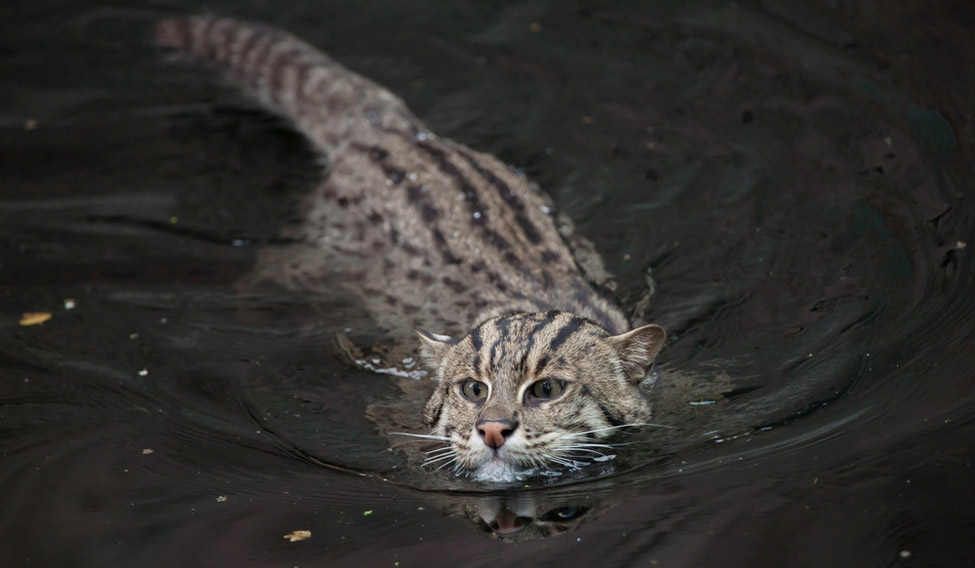
The Fishing Cat Press is pleased to announce the launch of seashores an international journal to share the spirit of haiku.

The objective of seashores is to share haiku from all over the world and explore how the way and the spirit of haiku, with its power to connect us to nature and our world can play a role in poetry and our lives in general.

Editorial team: Paul Chambers (www.paulchambershaiku.com) and Gilles Fabre (Haiku Spirit) with the contribution of David Burleigh.

www.haikuspirit.org to view more information 

You are all welcome to submit a maximum of eight (8) haiku/senryu, in any combination. Essays or articles on haiku are also welcome (app. 800 words max). All copyrights to remain with the author.

The submissions deadline for issue 1 is: 30 June 2018 for publication in autumn 2018.
Send all submissions (and any request of information) to haikuspirit@haikuspirit.org
Please enter Submissions for Seashores in the email subject. Family name, first name as well as country must be included in the email body text.

We regret to advise you that no free copies of this printed journal will be offered. Only contributors whose essay/article is selected to be published will receive a free copy. Price to be confirmed but each copy will be a maximum of €10 (including postage) for the first issue (2018).

Submissions Criteria:
1. All submissions must be unpublished and not being considered elsewhere.
2. All submissions must be in English. If originally in another language, translation must be provided with the original entry (if the author is not the translator, please indicate the translator’s details and his/her consent to publication).
3. All essays and articles must be submitted in English.

Submissions Guidelines:
Haiku (and senryu) need to reflect the rules and guidelines that are generally accepted in the global haiku community. Basically, haiku in three distinct lines with good rhythm are favoured and may include a season word (kigo) or a key word, a cut (kireji, by way of style, space or the use of punctuation or other) but poems of 1, 2 or 4 lines with haiku essence and spirit will also be considered. Ultimately, submissions will be judged on quality and originality.

Monday, 28 May 2018

The North - Irish Issue


The North – Irish Issue

Deadline: 30 Jul 2018

Issue 61 of The North, to be published in December 2018, will be a special Irish issue, edited by poets Jane Clarke and Nessa O’Mahony. It will focus on work by poets living on the island of Ireland, or who are from Ireland but living elsewhere. 
There is no set theme for submissions, but the editors are interested in contemporary poems reflecting the cultural diversity of life in Ireland in the 21st century, and particularly welcome submissions from poets from minority communities.
Send up to four unpublished poems to thenorthirishissue@gmail.com as a word attachment and cut and past it into the body of the email. Please make sure to put your name, postal address and email address on every sheet.
The editors also intend to include reviews of collections by Irish poets published between January 2017 and end April 2018. We welcome review copies – please email thenorthirishissue@gmail.com for address.

Friday, 18 May 2018

Sand Submissions

SAND is an English-language literary journal published twice annually in Berlin. It features prose and poetry, translations, art and photography. Our contributors come from all over the world and include established and emerging writers, poets, artists, and translators.

We look for work that is fresh, well-written, accessible, and diverse, as we take pride in producing a beautiful journal that can be enjoyed by a wide audience.  We’re particularly interested in writing from perspectives that are generally underserved in literature, including work by women, people of color, people from the LGBTQ+ community, and people from the wider international writing community.

There is a good Q&A on Six Questions - a great idea for a blog!

Deadline: 6th July 2018

Link http://sandjournal.com/submit-your-work/

Wednesday, 16 May 2018

Mslexia submissions on the theme of cooking

Note: Open to women writers only.

Themed Writing
Twice annually we ask for themed poetry and prose submissions for the Showcase (previously New Writing) section of the magazine. Winners are selected by our Guest Editors (in the past they have included Julia Blackburn, Nicci Gerrard, Pascale Petit, Rachel Cusk and Sarah Dunant) and are published in the magazine. We also make a small payment for most submissions we publish.

We look for stories of up to 2,200 words, poems of up to 40 lines, and short scripts of up to 1,000 words (including character names and stage instructions).

Please note: we only accept up to four poems, two short stories and two short scripts per entrant.

 Issue 79: COOKING
Making a meal can be an act of love and sensual pleasure – or an act of hatred and grudging resentment. It can also be source of intense anxiety. Can I afford it? Will there be enough? Will they like it? Will it be on time? CLOSING DATE: 4 June 2018

Submitting your work
Entries are judged anonymously, so please put your name on a separate cover sheet and omit your name from your poem or story.

Or online here

Tuesday, 8 May 2018

iota submission call

In the next issue, IOTA will explore work and play. 

Send your take on this theme. Be as oblique as you like (and they like oblique...) 

They are looking for short stories, poems, life writing, memoir, travel writing, food writing and more. These forms can be combined, played with, deconstructed and all can be completely fictive - they only ask that your writing is bold and original. To quote Emily Dickinson, "tell us all the truth, but tell it slant."


Features and essays - Email us your work

Stories - Email your short stories to us we’ll read and respond to submissions as they come in 

Poems - Email up to four poems

We will read all submissions and get back with our decisions within four weeks. Please send your work to: info@iotamagazine.co.uk

  • Fiction/non-fiction submissions may range between 500 and 2000 words 

  • Poems - we will consider submissions of up to four poems 

  • We can’t accept work that has previously been published in print or online

  • Please include your full contact details on a separate cover sheet with each submission

  • The closing date for submissions is July 1st 2018

Tuesday, 19 December 2017

Submissions to Skylight issue 10

Image result for Offering kneeling bali


The lovely people at Skylight are looking for submissions.
Deadline 1 February 2018 (midnight).

Please send up to three poems, along with a short biographical note (max 60 words), to skylightpoets47@gmail.com. Work should be unpublished.
Poems to be no longer than 40 lines.

Please send your poems both as an attachment (.doc, .docx, .txt or .rtf) and in the body of the email.

The editors are also looking for original artwork. We will be featuring one artist in each issue, publishing four or five pieces. If you would like to be this artist, please email your work during the submission window.

Contributors will receive one copy of the magazine.

Monday, 13 November 2017

Gregory O’Donoghue International Poetry Prize

The Munster Literature Centre holds an annual competition for an international poetry prize for a single poem, named in honour of a late Irish poet long associated with the Centre.
The Gregory O’Donoghue International Poetry Prize will have a first prize of €1,000 (approx $1190.63 USD/ £882.80 GBP @ xe.com on 21st September 2017), a week's residency at the Tyrone Guthrie Centre and publication in Southword Literary Journal. The MLC will subvent travel costs for the winner up to €600 and provide hotel accommodation and meals for four days during the Cork International Poetry Festival. At the festival, the winner will be treated to a poetry masterclass with Brian Turner.
There will be a second prize of €500, third prize of €250, and ten runners-up will each have their poems published in Southword and receive Southword’s standard fee of €30.
The final date for receipt of entries is November 30, 2017. The judge is Munster Literature Centre Director Patrick Cotter.
Due to the large volume of entries, the judge will not be able to notify the authors of non-winning poems or give individual feedback. A shortlist will be posted on our website in late January and the winners will be announced during the Cork International Poetry Festival. We recommend signing up for the Munster Literature Centre newsletter if you would like to be kept up-to-date with all competition developments directly.
The 2018 Judge: Patrick Cotter
The competition is open to original, unpublished poems in the English language of 40 lines or less.
Fee €5 per poem. 5th poem free.

Sunday, 8 October 2017

Coast to Coast Magazine Submissions

No automatic alt text available.
Issue 3 of Coast to Coast Spring issue is open for submissions

Deadline October 22nd

Coast to Coast journal is designed and created by writer Maria Isakova Bennett, and edited by herself and poet Michael Brown. an A6 stitched journal, a piece of art work and a poetry publication. Each issue is produced as a limited edition, and will contain the work of twelve poets selected during submission periods. 
Maria has combined stitch and text to create a journal which is different to conventional poetry journals and magazines that you subscribe to, resulting in a publication which is a small piece of art in itself.

Email, up to 3 poems of no more than 24 lines both as a doc and in the body of the email to Coast2journal@gmail.com Include a 50 word max bio and address for your copy.

All poets will hear the outcome of their work by November 6th.

Issue 2 of to Coast to Coast to Coast includes a wonderful list of poets. More info here 

Wednesday, 5 July 2017

Skylight 47 Issue 9 Submissions

The Galway based magazine goes from strength to strength. Call for submissions now for Issue 9.

Our next issue will be launched in Autumn 2017.
Deadline midnight 1 August.
Please send up to three poems, along with a short biographical note (max 60 words), to skylightpoets47@gmail.com. 

Work should be unpublished.
Poems to be no longer than 40 lines.
Please send your poems both as an attachment (.doc, .docx, .txt or .rtf) and in the body of the email.
The editors are also looking for original artwork. We will be featuring one artist in each issue, publishing four or five pieces. If you would like to be this artist, please email your work during the submission window.

Contributors will receive one copy of the magazine.

Tuesday, 2 May 2017

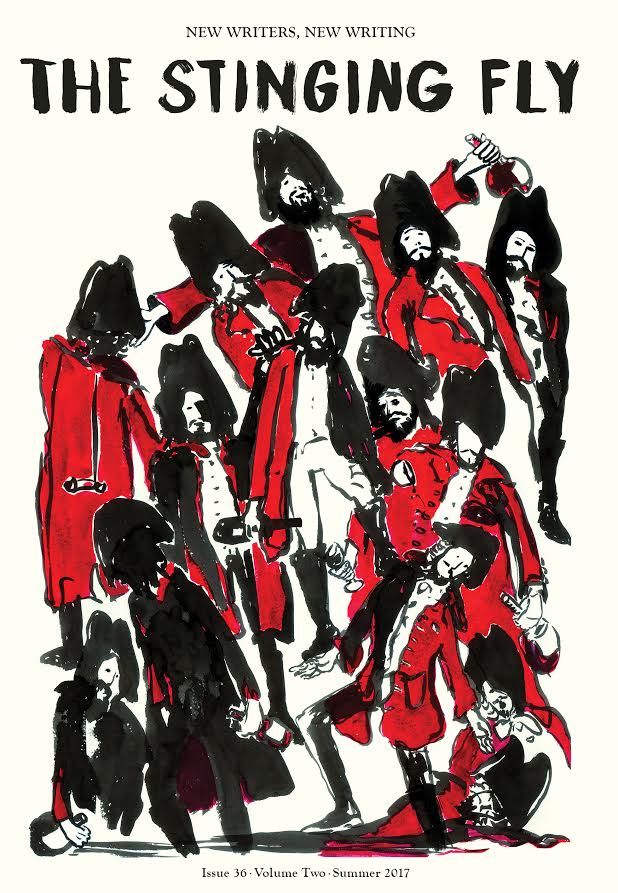
Stinging Fly Submissions

The Stinging Fly is a Dublin-based print magazine and small press. 

They are now publishing two issues each year instead of three. Each of our issues contains a mix of short fiction, poetry, essays and author interviews. We have a particular interest in publishing new writers and in promoting the short story. 

We accept submissions of short stories and poetry on an issue-by-issue basis. Unless otherwise clearly stated, there is no preferred theme – we're just looking for a lively mix of fresh and original new writing to share with our readers. Essays and interviews are commissioned. We pay a small fee for stories, poems and other work. Contributors also receive a free copy. 

We are now accepting fiction and poetry submissions (including work in translation) for Issue 37 of the magazine. 

Link to Submissions Guidelines and Submittable. 

Deadline: Friday 19th May 2017.

They have an extensive archive which includes a poem from me!

They are also accepting applications for our Summer Fiction workshops. Workshop applications will not be considered for publication. 

Sunday, 9 April 2017

Abridged 0 - 1979 Submission Call/News

 
Human beings are multifarious and moody – never purely one thing, never completely sure of things, always fluctuating, no matter what’s being said at one time or another. In the pulse of the absolute present, the world of what we know and experience, ‘everything that is the case’, remains mutable under the simultaneous pressures of all thought and activity. The clay stuff of what-is remains wet, in a perma-flux of reformation.


Such recognition is the fire that fixes the clay of tiny moments, complex instants of colliding moods and actions, into recorded time, the having-happened. And so in this way moments become monuments on the landscape of what-we-have-come-to-know-and-be: the landscape of our history. Isolated, named, these monuments are flocked to by pilgrims from the present seeking answers to the question of now.

There is always a reason, but never simply so. No action sits alone in the world but is surrounded by causes and reactions. Everything is reactive. Every instant is a universe. To pin-point feels like power. Pushing them away from the complexities of ourselves, we can turn definitive moments into the monsters of our time. It is much easier to point and say ‘that is the monster and that is when it arrived’ than try to explain, to unpick the make-up of the primordial soup of feelings and happenings in which a monstrosity was engendered. It is easier for there to be a monster than for there to be monstrosity: one can be boxed up, stuck with pins, framed, blamed and separated; the other must be swum through and breathed in. There are always reasons, but never one in isolation, never one that is complete. Every definitive moment is deeply involved, a knot of the present’s pressures, in which more might be complicit than will ever be comprehended. These moments erupt out of the surface of world as we know it, cracking it open and leaving us swarming in the gaps, around the fragments, trying with every change to conjure a glue for piecing some sort of whole world together again.

Abridged in 0-1979 explores those moments, big and small when our world shattered and changed and our attempts to make sense of it all. When there’s nothing here for me and you…

Abridged is looking for poetry for its 0 – 1979 issue. Up to four poems can be submitted. 

Submissions should be sent to abridged@ymail.com

Deadline: 5th May 2017.


Abridged is supported by the Arts Council of Northern Ireland

Thursday, 16 March 2017

Call for Submissions for Issue #5 of Banshee

I'm happy to have a poem in issue #4 of Banshee magazine, a rather .creepy poem I think. They are looking for submissions for issue #5


Closing date for submissions: 31st March 2017


Submissions for issue #5 of Banshee (autumn/winter 2017) are open.


All submissions should be previously unpublished.


Stories and essays should be 1500-5000 words. Flash fiction should be less than 1000 words, poems no more than 40 lines.


We are happy to read up to two stories, up to two essays, up to four flashes and up to six poems. However, we ask that each writer submit in only one of the above categories.


Submissions should be in one .doc or .docx format attachment, double spaced, and in a non-quirky font.


Please include a short bio (max 50 words) in the body of your email.


Email to bansheelit at gmail dot com, with the category of the work (flash/story/essay/poetry) in the subject line.


We believe in paying writers. We can offer contributors a small fee as well as two copies of the journal.


Past issues, including extracts, can be found at: http://bansheelit.tumblr.com/issues

Tuesday, 14 March 2017

New Issue of Skylight

The launch of Skylight 47, Issue 8, takes place at the March Over The Edge reading at Galway City Library at 6.30 on Thursday 30th March. You are all invited to join us to celebrate the release of another great issue full of poetry, reviews, interviews, comment pieces, and of course, the masterclass.


Poetry contributors to Issue 8 are also invited to read their poem at the launch event.


I'm very happy to have a poem included in this issue but I have to miss the launch as I'll be moving house. Do yourself a favour, get down there and grab a copy.

Thursday, 16 February 2017

Abridged 0 - 49: Babel Submission Call

Speaking one language was living one language when they came together to build something that reached toward the above and beyond. In an utopia of unification and pure communication they were elevating themselves together. They were the makers of an axis of worlds, bridging earthly and heavenly, heavy and weightless, rough and holy, body and mind, mess of matter and the idea of perfection beyond such mess. The bridging tower would mean completeness, the unification of all that it meant to be. And its foundations and substance were the cooperation of its unity of builders. And communication made them one in their building, a whole of the parts. And they were making a whole of the parts of the universe, earth and sky. But, so the story goes, man has no right to such unity, or ultimately no such capacity. Some great force, whether from the earth or the heavens, shattered their plane of one language into shards of multifarious tongues. Each shard became alone, growing and modifying alone. There was to be no jigsawing. There was to be no single tower of completeness but millions of individuals, each in their own way reaching and crumbling, each standing alone. With such a fragmenting, so fragmented the links not only between divine and profane and between person and person, but between being and thinking, between person and self. They were left floundering in acquired and diverse language systems, seas of words that submerged the known world, that remain somewhat alien as an element, filling the gaps between bodies, filling mouths when they try to speak truth.


We are post-truth. So we are told, so we have been informed with such unrelenting frequency recently that even this term could be at risk of losing its meaning, of becoming only the sounds and shapes that make up its utterance, more verbal clutter littering the ether. Post-truth: it means words have overwhelmed us. It says they are treacherous, no longer nourish us with knowledge but instead suffocate with meaninglessness. As God before, truth is dead. Post-truth is the burdensome corpse of communication


Abridged 0-49 is Babel, concerning the fall-out from the reactionary combination of two elements that have become fundamental in contemporary life: post-truth and social media. Our lives orientate around the aspiration for maximal connection. Online, it seems, is a parallel existence to our "real world" in which we are never alone, and where we have the capacity to speak out on a global platform, to anyone and everyone. But could it be that this new apparent root-system, this verbal deluge turbulent beneath each moment of our daily lives, leaves us ultimately detached?
"Too much contact, no more feeling."


Abridged is looking for poetry and art for its 0 – 49: Babel issue.
Up to four poems can be submitted and art can be up to A4 landscape and should be 300dpi or above.
Submissions should be sent to abridged@ymail.com Deadline:24th March 2017.
Please note that this is a landscape issue.


www.abridgedonline.com 

Saturday, 28 January 2017

Mslexia Short Fiction Competition 2017

Open to stories up to 3,000 words plus a new category for flash fiction up to 300 words, there’s even more reason to get started on some new prose.

Deadline: 20 March 2017

The prize for best Short Story is an amazing £2,000 and includes two optional extras: a week’s writing retreat at Gladstone’s Library and a money-can’t-buy mentoring day with a Virago editor. Three other finalists will receive £100. The new Flash Fiction category has a first prize of £500 with three finalists winning £50. All winning pieces will be published in the June issue of Mslexia.

Judging the longer stories this year is twice Booker-shortlisted novelist and short story author Deborah Levy, whose novel Hot Milk came out last year. Our new Flash Fiction category is being judged by award-winning flash fiction writer and novelist Kit de Waal, whose début novel My Name is Leon was shortlisted for the Costa First Novel Award in 2016.

Fee: £10 per story.
Short Story category entries can be between 300 and 3,000 words in length and can be on any subject.
Flash fiction category entries should be up to 300 words in length and can be on any subject.

See the website for full details of how to enter. 

Sunday, 8 January 2017

Magma Magazine Poetry Competition

Magma magazine’s poetry competition is open for entries.  

Deadline: January 16th 2017.  

As always, we are running two competitions concurrently. 

The Judge’s Prize for poems of 11 to 50 lines is being judged this year by award-winning poet Jane Draycott whose collections include Over, Prince Rupert’s Drop and The Night Tree; she will be reading all entries – there are no sifters. 

The Editors’ Prize for poems of up to 10 lines is judged by a panel of five Magma Editors.  The prize money for both competitions is the same, so double your chances and try your luck at both - first prize for both the Judge’s and Editors’ Prize of £1000, second prize of £300 and third prize of £150.

The six prize-winning poems will be published in Magma, and there will also be five special mentions for the Judge’s Prize and for the Editors’ Prize.  Winning and commended poets will read their poems at a Magma Competition Event in March next year.

The entry fees are £5 for the first poem, £4 for the second and £3.50 for the third and each subsequent poem. Magma magazine subscribers benefit from reduced fees: £4 for the first poem, £3 for the second, and £2.50 for the third and each subsequent poem.


Link here

Wednesday, 4 January 2017

The Prole Laureate Poetry Competition, 2016

Welsh based magazine Prole has its annual poetry competition

Prize
Winner: £200, Publication in Prole 22 in April 2017.
Publication on the Prole website
2 x runner up prizes of £50, publication in Prole 22.
Publication on the Prole website

Judge: Macdara Woods

Deadline: January 31st 2017

We are, as ever, open regarding style, content and length. What we are after is poetry that epitomises the editorial values of Prole: to make writing engaging, accessible, entertaining and challenging. Quality is all.

Fees: £3.00 for first entry, £2.00 for any subsequent entries. You can submit online and pay with paypal

Link is here

Tuesday, 6 December 2016

Honest Ulsterman Submission Call


typewriter


There's a new Honest Ulsterman Submission Call now open. Honest Ulsterman is an online
mag.


We're calling for poetry (up to 4 poems), prose and critical writing/interviews for our Februrary issue. Prose can be up to 5000 words. We'd also welcome aural/video poetry.


Submissions can be sent to hueditor@theverbal.co


Deadline: 20th January 2017.


Link here

Tuesday, 29 November 2016

Submissions open for Skylight Magazine

ISSUE 8 of Skylight magazine is scheduled for Spring 2017
Submissions will be accepted up to 1 Jan 2017 (deadline midnight 1 Jan).

Please send up to three poems, along with a short biographical note (max 60 words), to skylightpoets47@gmail.com. Work should be unpublished.

Poems to be no longer than 40 lines.

Please send your poems both as an attachment (.doc, .docx, .txt or .rtf) and in the body of the email.

The editors are also looking for original artwork. We will be featuring one artist in each issue, publishing four or five pieces. If you would like to be this artist, please email your work during the submission window.

Contributors will receive one copy of the magazine.

Sunday, 13 November 2016

Women’s Way Short Story Competition


Woman’s Way is launching a short story competition for the second year. We want all our readers who enjoy writing to enter our competition.

Our theme this year is REINVENTION. This year, we’re narrowing the genres to five and will be picking one winner from each genre. These are:

  • Romance
  • Horror
  • Childrens/Young Adult
  • Humour/Comedy
  • Crime/Thriller

Our winners’ stories will appear in our Christmas annual, issue 51 (on sale December 27) plus some extra special gifts.

Note: They are not saying what the prize is...but there is no fee

  • Stories must be previously unpublished though you can submit more than one story per category. We will not accept poetry, scripts or an opinion piece
  • Word count: One page stories of a maximum of 800 words
  • Entries should be typed on double line spacing on side of paper only, Times New Roman, 12 point, with wide margins. All stories must be in English and each page numbered
  • Please add a cover page to each story which includes: your name, postal address, email address, contact number, name of story, word count and category you’re entering. Also include a 50-word biography
  • Stories may edited to Woman’s Way’s house style

More info on writing.ie
Send your completed stories and cover page to atoner@harmonia.ie 

Deadline: 1st December